Sunday, February 28, 2016

Plastic Souvenir Buildings, Monuments & Towers


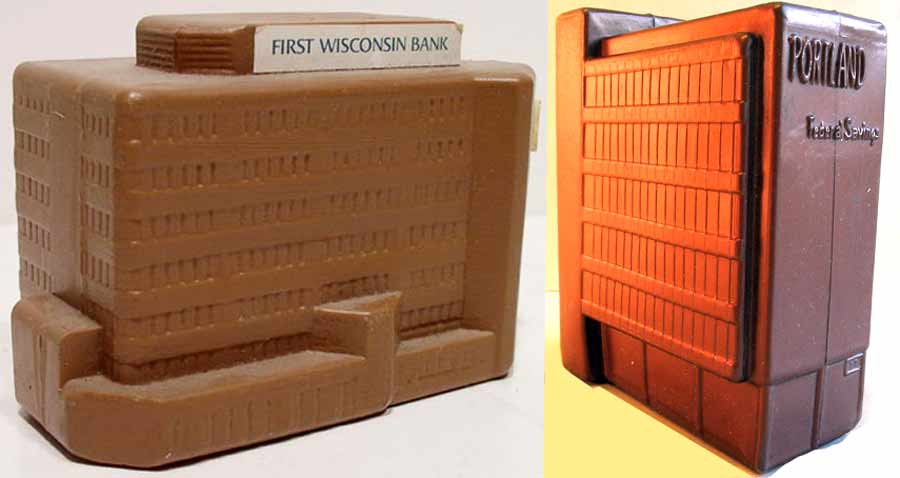
From Hard plastic to soft plastic souvenir building have been made over the years have been made of this petroleum-based material. Gold plastic coin banks from Buffalo and Rochester in N.Y., Greenville S.C., Kanawah Valley, Independence Hall and Howard Johnson’s to name a few. Below are some photos of various miniature building and tower replicas I’ve seen.


Sunday, February 21, 2016

Cast Iron Souvenir Buildings & Coin Still Banks


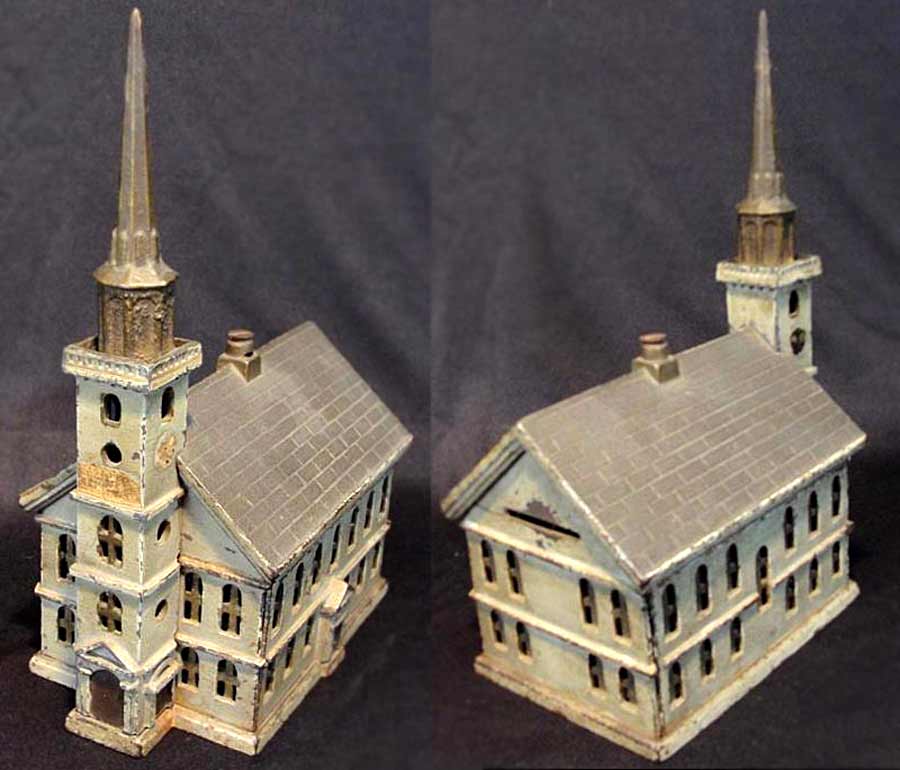
The earliest cast iron artifacts date to the 5h century BC and were discovered by archaeologist in China. Cast iron was a popular material for the production of coin banks in the 1800’s. Pictured here are the Palace Bank is a cast iron still coin bank.  A 1976 Lynchburg Courthouse in Virginia. Old South Meeting House church in Boston cast iron still bank. The Canadian Traders Bank Architectural coin bank. I’ve written previously about some cast iron still banks, the American Surety and Park Row cast iron banks, and a collection of cast iron banks on display in a bank's lobby.
I collect 3D metal souvenir buildings of all places and ages. If you have any to sell or trade, contact me via my email address in the “complete profile” link at the top right of this blog.

Sunday, February 14, 2016

Brass Souvenir Buildings & Monuments

Many replicas are made of brass and some may be cast in brass with a different finish over the top.  The entire set of Russian souvenir buildings on marble bases are made of solid brass. Others include, pictured here, religious institutions like churches and mosques, Egyptian pyramid inkwells, Shakespeare's Birthplace home in Stratford, England, and the Canadian Ypres WWII monument.


I collect 3D metal souvenir buildings of all places and ages. If you have any to sell or trade, contact me via my email address in the “complete profile” link at the top right of this blog.

Saturday, February 6, 2016

Alabaster Souvenir Buildings, Arches & Columns


Do you collect souvenir buildings made of alabaster? I’m going to explore some non-metal ‘other materials’ in a series of posts Some alabaster architectural miniatures are grand antiques like this model of the Cathedral at Pisa and other Grand Tour souvenirs, while others are still being made and simple, like Egyptian pyramids. First question:  What is alabaster?  In simple terms, It’s a fine-grained, translucent form of gypsum, typically white or yellow, that is often carved. In lengthy terms, alabaster is a name applied to varieties of two distinct minerals, when used as a material: gypsum (a hydrous sulfate of calcium) and calcite, a carbonate of calcium, also known as onyx-marble, Egyptian alabaster or Oriental alabaster. In geological terms alabaster is "a stalagmitic limestone marked with patterns of swirling bands of cream and brown.” In general, but not always, ancient alabaster in Egypt and the Near & Middle East is calcite. Alabaster in medieval Europe is gypsum. Modern alabaster is probably calcite, but may be either. Both are easy to 'work’ and carve and as both are slightly water-soluble, have been used for making a variety of indoor artworks and carvings, as they will not survive long outdoors. TIP: don’t wash alabaster with soap. If alabaster with a smooth, polished surface is washed with dishwashing liquid, it will become rough, dull and whiter, losing most of its translucency and luster. Here are some tips on how to clean alabaster. I collect 3D metal souvenir buildings of all places and ages. If you have any to sell or trade, contact me via my email address in the “complete profile” link at the top right of this blog.


Related Posts with Thumbnails